


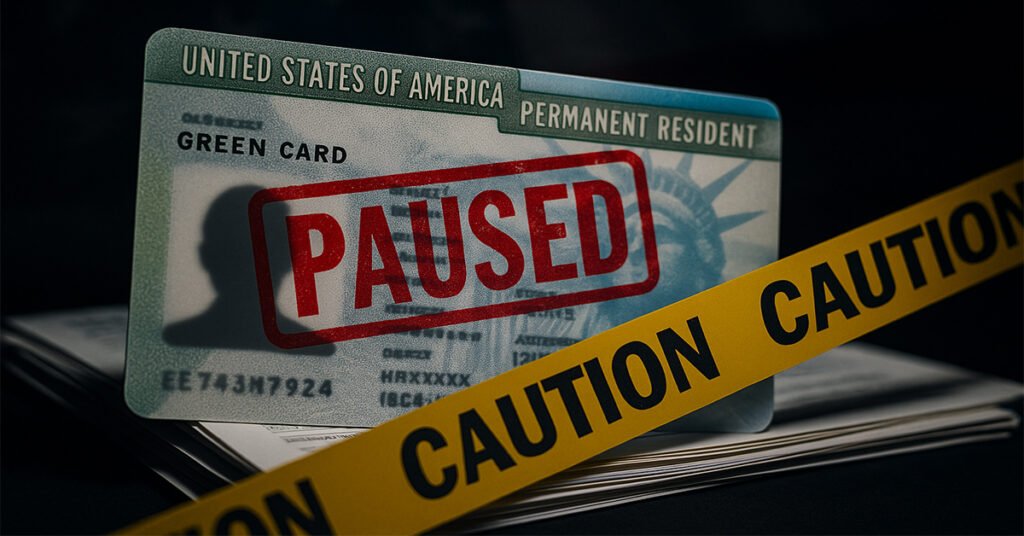
Breaking News: Immigration Benefits Frozen for 19 Nations
The United States has implemented an immediate pause on all pending immigration applications from 19 designated “countries of concern,” affecting thousands of applicants currently awaiting green cards, asylum decisions, and other immigration benefits.
Critical Updates:
- All pending applications from 19 countries suspended indefinitely
- Green card, asylum, and naturalization applications affected
- Some citizenship ceremonies abruptly canceled
- Policy follows Washington D.C. National Guard attack
- No timeline provided for resumption of processing
Which Countries Are Affected?
Complete List of 19 Countries Under Travel Ban
The Trump administration’s expanded travel ban includes the following nations:
Middle East & Central Asia:
- Afghanistan
- Iran
- Yemen
Africa:
- Burundi
- Chad
- Republic of the Congo
- Equatorial Guinea
- Eritrea
- Libya
- Sierra Leone
- Somalia
- Sudan
- Togo
Asia:
- Burma (Myanmar)
- Laos
- Turkmenistan
Americas:
- Cuba
- Haiti
- Venezuela
Nationals from these countries currently residing in the United States will have their pending applications for asylum, green cards, work permits, status changes, and other immigration benefits placed on hold pending additional vetting procedures.
What Applications Are Affected?
Scope of the Suspension
According to U.S. Citizenship and Immigration Services (USCIS) internal documents, the pause impacts:
Permanent Residency Applications:
- Green card applications (adjustment of status)
- Family-based immigration petitions
- Employment-based immigration petitions
- Diversity visa lottery winners
Asylum and Refugee Benefits:
- Pending asylum applications
- Refugee resettlement cases
- Temporary Protected Status (TPS) applications
Work Authorization:
- Employment Authorization Documents (EAD)
- Work permit extensions and renewals
- Optional Practical Training (OPT) for students
Status Changes and Extensions:
- Change of status applications
- Extension of stay requests
- Visa waivers
Naturalization:
- Citizenship applications
- Naturalization ceremonies (some already canceled)
Timeline: How the Policy Developed
November 27, 2024: Initial Policy Implementation
Immigration attorney Rosanna Berardi revealed that USCIS first issued the restrictive policy on November 27, 2024—one day after a violent incident near the White House.
Two National Guard members were attacked by a suspect who authorities identified as having entered the United States from Afghanistan in 2021. This incident became the catalyst for the administration’s immediate policy response.
December 2024 – January 2025: Policy Expansion
Following the initial directive, the policy has been updated and expanded multiple times:
- Additional countries added to the list
- Broader categories of applications included
- Enhanced vetting requirements introduced
- Operational directives issued to USCIS field offices
Current Status (2025)
The pause remains in effect with no published end date. USCIS is developing additional vetting procedures and guidance for officers handling applications from the affected countries.
Official Government Position
Department of Homeland Security Statement
A Department of Homeland Security spokesperson provided the administration’s rationale:
“The Trump Administration is making every effort to ensure individuals becoming citizens are the best of the best. Citizenship is a privilege, not a right. We will take no chances when the future of our nation is at stake.”
The spokesperson added that the administration is “reviewing all immigration benefits granted by the Biden administration to aliens from Countries of Concern.”
USCIS Policy Manual Updates
USCIS has updated its Policy Manual to require immigration officers to apply “country-specific factors” when adjudicating:
- Green card applications
- Extensions or changes of status
- Immigration waivers
- Certain work authorization requests
These formal policy changes are now part of official USCIS operating procedures, though many of the specific implementation details remain in internal directives not available to the public.
Canceled Naturalization Ceremonies
Abrupt Cancellations Create Uncertainty
Multiple reports confirm that USCIS has abruptly canceled swearing-in ceremonies for individuals from the travel ban countries who had already completed their naturalization process.
These cancellations represent a significant departure from standard practice, as naturalization ceremonies typically proceed once an applicant has:
- Passed citizenship test and interview
- Completed background checks
- Been approved for naturalization
- Received ceremony scheduling notice
The cancellations have left hundreds of applicants in legal limbo—having fulfilled all requirements but unable to take the oath of citizenship and receive their naturalization certificates.
Legal Implications and Concerns
Transparency and Statutory Authority Questions
Immigration attorney Rosanna Berardi highlights several legal concerns with the new policy:
Lack of Transparency: “What’s less formal are the reported pauses on certain adjudications for nationals of the 19 listed countries. Those appear to come from internal operational directives, not published policy.”
Statutory Authority Issues: The policy raises questions about whether the administration has legal authority to suspend pending applications without formal rulemaking procedures.
Scope of Travel Ban: Berardi notes concerns about “the reach of the travel ban proclamation beyond the entry context.” Traditional travel bans focused on entry to the U.S., while this policy affects people already present in the country.
Expected Legal Challenges
Immigration law experts anticipate significant litigation:
Potential Legal Grounds:
- Violation of Administrative Procedure Act (requiring public notice and comment)
- Equal protection and due process concerns
- Exceeding statutory authority under immigration law
- Arbitrary and capricious agency action
Previous Travel Ban Litigation: Earlier versions of Trump administration travel bans faced extensive legal challenges, ultimately reaching the Supreme Court. Similar litigation patterns are expected for this policy.
Impact on Affected Applicants
What This Means for Pending Cases
Applicants from the 19 countries face significant uncertainty:
Processing Delays: No timeline exists for when applications will resume processing. The pause could last weeks, months, or longer depending on when new vetting procedures are implemented.
Status Implications: Individuals whose work permits or temporary status expire during the pause may face:
- Loss of work authorization
- Potential loss of legal status
- Inability to travel internationally
- Family separation issues
Financial Hardship: Many applicants have invested thousands of dollars in application fees, attorney costs, and related expenses. The indefinite pause creates financial uncertainty.
Career and Educational Impact: International students, employment-based applicants, and those with time-sensitive opportunities face potential career setbacks or lost opportunities.
Real-World Consequences
Employment: Workers on temporary visas may lose jobs if unable to renew work authorization.
Family Unity: Family-based immigration petitions frozen, preventing reunification with spouses, children, or parents.
Education: Students unable to extend Optional Practical Training may need to leave the country or abandon educational goals.
Stability: Prolonged uncertainty affects mental health, housing decisions, and life planning.
What Affected Applicants Should Do
Immediate Steps to Take
1. Document Everything:
- Keep copies of all application receipts and notices
- Document your current immigration status and expiration dates
- Maintain records of employment, residence, and family ties
2. Consult Immigration Attorney:
- Seek legal advice specific to your situation
- Understand your options if status expires during pause
- Explore alternative visa categories if available
3. Monitor Official Sources:
- Check USCIS website regularly for policy updates
- Sign up for case status alerts
- Follow announcements from immigration advocacy organizations
4. Prepare for Multiple Scenarios:
- Plan for extended delays
- Consider contingency plans if status expires
- Explore options in other countries if necessary
5. Maintain Legal Status:
- File timely extension applications before current status expires
- Keep valid passport and documentation
- Comply with all visa conditions
What NOT to Do
❌ Don’t leave the U.S. if you have pending applications – You may not be able to return
❌ Don’t let current status expire – File extensions even if processing is paused
❌ Don’t provide false information – Enhanced vetting makes honesty crucial
❌ Don’t ignore USCIS notices – Respond to all requests promptly
❌ Don’t assume the worst – Policies may change; stay informed
Historical Context: Travel Bans Under Trump
First Term Travel Ban (2017-2021)
The current policy echoes the controversial “Muslim Ban” from Trump’s first term:
Original Travel Ban (2017):
- Initially targeted seven predominantly Muslim countries
- Faced immediate legal challenges and nationwide protests
- Underwent multiple revisions
Supreme Court Decision (2018):
- Upheld third version of travel ban in Trump v. Hawaii
- Ruled president has broad authority over immigration
- Set precedent cited by current administration
Biden Administration (2021-2024):
- Repealed Trump-era travel bans on first day in office
- Resumed processing for affected applicants
- Cleared backlog of pending cases
Key Differences in Current Policy
Broader Scope: Current policy affects people already in the U.S., not just those seeking entry.
More Countries: 19 countries affected compared to original ban’s seven.
Additional Categories: Impacts green cards, work permits, and status changes beyond visa issuance.
No Judicial Review Yet: Previous bans were challenged immediately; current policy awaits formal legal challenges.
Comparison with Other Immigration Policies
How This Differs from Standard Vetting
Traditional Immigration Screening:
- Background checks through FBI databases
- Biometric collection (fingerprints, photos)
- Consular interviews
- Medical examinations
- Document verification
Enhanced Vetting Under New Policy:
- Country-specific additional scrutiny
- Extended background check periods
- Possible in-person interviews for all applicants
- Review of social media and digital footprint
- Verification of family and associate information
Impact on Processing Times
Before Policy (2024):
- Green cards: 10-18 months average
- Work permits: 3-6 months
- Asylum: 6+ years (due to backlog)
Expected Under New Policy:
- Processing times indefinite
- Additional vetting adds months or years
- No published timelines available
Perspectives from Immigration Experts
Legal Community Response
Immigration attorneys across the country are expressing concerns about the policy’s implementation and legal foundation.
Attorney Rosanna Berardi summarizes the situation: “Slower processing, more scrutiny, and more uncertainty for affected applicants while litigation challenges are almost certain to follow.”
Advocacy Organization Statements
Immigration advocacy groups are preparing responses:
American Immigration Lawyers Association (AILA): Monitoring policy implementation and preparing legal resources for affected attorneys and applicants.
American Civil Liberties Union (ACLU): Evaluating potential constitutional challenges and discrimination claims.
National Immigration Law Center (NILC): Providing guidance to affected communities and documenting policy impacts.
Economic and Social Implications
Workforce Impact
The pause affects critical sectors relying on skilled foreign workers:
Healthcare: Physicians, nurses, and healthcare workers from affected countries may face employment disruptions.
Technology: Software engineers, researchers, and tech professionals on employment-based visas encounter uncertainty.
Education: University faculty, researchers, and graduate students face potential career interruptions.
Essential Services: Workers in agriculture, food service, and other essential industries may lose work authorization.
Family Separation Concerns
Thousands of families face prolonged separation:
- Spouses unable to join partners in the U.S.
- Children separated from parents
- Elderly parents unable to reunite with adult children
- Newlyweds prevented from living together
What Happens Next?
Short-Term Outlook (Next 3-6 Months)
Policy Development: USCIS is expected to issue formal guidance on enhanced vetting procedures within coming months.
Legal Challenges: Immigration advocacy groups and affected individuals likely to file lawsuits challenging the policy’s legality.
Congressional Response: Democratic lawmakers may introduce legislation to limit executive authority over immigration benefits.
Diplomatic Implications: Affected countries may respond with reciprocal restrictions on U.S. citizens.
Long-Term Considerations
Precedent Setting: Policy could establish framework for future nationality-based immigration restrictions.
International Relations: Strained relationships with 19 affected nations may impact trade, security cooperation, and diplomatic ties.
Immigration System Changes: Could signal broader reforms to immigration vetting and approval processes.
Legal Landscape: Court decisions will shape executive power over immigration for future administrations.
Frequently Asked Questions
Can I still apply for a green card if I’m from one of these countries?
You can submit applications, but they will not be processed until the pause is lifted and new vetting procedures are implemented.
What if my work permit expires during the pause?
Consult an immigration attorney immediately. You may need to file for an extension before expiration, though processing is uncertain.
Does this affect people who already have green cards?
Current green card holders are not directly affected, though renewals and travel may face additional scrutiny.
Can I travel outside the U.S. if I have a pending application?
Travel is extremely risky with pending applications. You may not be able to re-enter. Consult an attorney before making travel plans.
Will this policy be permanent?
Unknown. It remains in effect indefinitely pending implementation of new vetting procedures and potential legal challenges.
Are there exceptions to the pause?
No publicized exceptions exist currently, though USCIS may grant case-by-case discretion in extraordinary circumstances.
Resources and Support
Official Government Resources
USCIS Website: uscis.gov Case Status: uscis.gov/casestatus USCIS Contact Center: 1-800-375-5283 Department of Homeland Security: dhs.gov
Legal Assistance
American Immigration Lawyers Association: aila.org – Find qualified immigration attorneys Legal Aid Organizations: immigrationadvocates.org/nonprofit/legaldirectory Pro Bono Legal Services: Many law schools and nonprofits offer free consultations
Advocacy Organizations
American Civil Liberties Union (ACLU): aclu.org/issues/immigrants-rights National Immigration Law Center: nilc.org American Immigration Council: americanimmigrationcouncil.org
Community Support
Ethnic Community Organizations: Many communities have organizations supporting nationals from affected countries Religious Organizations: Churches, mosques, and temples often provide immigration support University International Student Offices: For students affected by the policy
Conclusion
The U.S. government’s pause on immigration applications from 19 countries represents a significant shift in immigration policy with far-reaching consequences for thousands of applicants and their families.
With no clear timeline for resumption and substantial legal questions surrounding the policy’s implementation, affected individuals face prolonged uncertainty regarding their immigration status, employment, education, and family unity.
As the situation develops, staying informed through official channels, seeking qualified legal advice, and maintaining proper documentation will be crucial for navigating this challenging period.
The coming months will likely bring legal challenges, policy refinements, and potentially legislative responses that could reshape the landscape of U.S. immigration policy for years to come.