


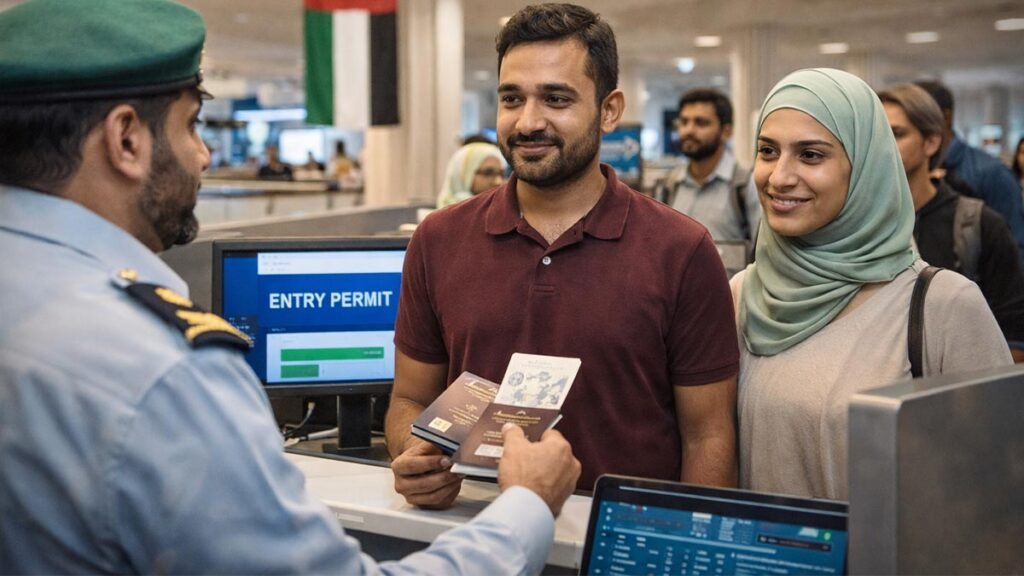
Thousands of expatriates stranded abroad due to flight disruptions and escalating regional tensions can now breathe a sigh of relief. The UAE’s Federal Authority for Identity, Citizenship, Customs and Port Security (ICP) has rolled out a temporary relief measure allowing residents with expired residency visas to return to the country without securing a new entry permit. This provision stays active through March 31, 2026, offering a critical window for affected individuals to re-enter and sort out their immigration status.
What Is This Special UAE Entry Rule All About?
A Practical Response to Extraordinary Circumstances
Rather than enforcing standard immigration protocols during a period of widespread travel chaos, UAE authorities have taken a pragmatic stance. The ICP confirmed that expatriate residents whose UAE residency permits lapsed while they were overseas can travel back directly — bypassing the usual requirement of obtaining a fresh entry visa before arrival.
This temporary provision applies specifically to residents whose visas expired on or after February 28, 2026, during a period marked by significant aviation disruptions across the Middle East. The decision underscores the UAE government’s commitment to supporting its large expatriate community during times of genuine hardship.
Why Did the UAE Introduce This Policy?
Regional Airspace Closures Force Government Action
The backdrop to this decision is the escalating tensions involving Iran, the US, and Israel, which triggered widespread airspace closures and flight suspensions across several Gulf nations. Airlines were compelled to cancel or significantly reroute flights, leaving countless residents marooned in foreign countries with no viable path home before their residency permits expired.
Faced with this extraordinary situation, UAE immigration authorities determined that penalising residents for circumstances entirely outside their control would be both unjust and counterproductive. The temporary entry rule was therefore introduced to eliminate unnecessary bureaucratic obstacles and facilitate the smooth return of stranded expatriates.
Keeping Families and the Workforce Intact
Beyond the logistical dimension, authorities also highlighted the human cost of prolonged separations. Many residents who had travelled abroad earlier in the year found themselves unable to reunite with their families in the UAE due to persistent flight cancellations and regional border restrictions. This policy directly addresses that hardship, enabling families to come back together without delay.
Key Details of the Temporary Entry Provision
Who Qualifies and What to Expect
The measure is straightforward but comes with specific conditions that eligible residents should understand clearly:
- Who it covers: Residents whose UAE residency visas expired while they were physically outside the country
- Expiry threshold: Visas that lapsed on or after February 28, 2026
- Grace period deadline: Valid for re-entry until March 31, 2026
- No new permit needed: Eligible residents may return directly without applying for a fresh entry visa
- Fine waivers included: Penalties typically associated with overstaying abroad are waived for those returning within the grace window
- Post-arrival obligations: Once back in the UAE, residents must complete residency renewal or status correction procedures through official immigration channels
Immigration officials have strongly encouraged all affected individuals to return before the March 31 deadline to prevent complications once the temporary policy expires.
No Fines — A Major Relief for Expatriates
Overstay Penalties Suspended for Eligible Residents
One of the most significant aspects of this initiative is the full waiver of financial penalties for residents whose visas expired due to these exceptional travel conditions. Under normal circumstances, overstaying abroad on an expired residency permit can attract hefty fines and administrative complications. However, the ICP has confirmed that eligible returnees will face no such penalties, provided they arrive back in the UAE within the designated timeframe.
This relief is expected to benefit thousands of professionals employed across a broad spectrum of sectors, including finance, technology, construction, and hospitality — industries that form the backbone of the UAE’s dynamic economy.
The UAE’s Track Record of Flexible Immigration Policies
A Consistent Pattern During Crisis Periods
This latest measure is far from an isolated decision. The UAE has established a consistent pattern of adapting its immigration framework during periods of disruption. In recent weeks alone, authorities have also introduced extended visa grace periods, overstay fine waivers, and revised deadlines for travellers affected by airspace closures.
Immigration specialists note that these responsive policies reinforce the UAE’s global reputation as a premier destination for talent, business, and expatriate communities. With foreign nationals constituting nearly 90% of the country’s total population, maintaining smooth and fair immigration procedures during emergencies is not merely a courtesy — it is an economic and social necessity.
Practical Guide: What Returning Residents Need to Do
Steps to Take Before and After Arrival
For expatriates planning to take advantage of this provision, here is a clear action plan:
Before travelling:
- Confirm that your residency visa expired on or after February 28, 2026
- Verify that you were outside the UAE at the time of expiry
- Book your return travel before March 31, 2026
Upon arrival in the UAE:
- No new entry permit is required — proceed through standard arrival channels
- No overstay fines will be applied during the grace period
After returning:
- Visit the relevant immigration authority to initiate residency renewal
- Complete all required documentation to regularise your status promptly
- Monitor official ICP communications for any updates or extensions
Broader Implications for the UAE’s Expatriate Community
Stability, Economy, and Workforce Continuity
The ICP emphasised that this initiative aligns seamlessly with the UAE’s wider objective of removing unnecessary immigration barriers that could disrupt economic productivity. With the country’s workforce so heavily dependent on expatriate talent, even temporary residency disruptions can have far-reaching consequences for businesses, service industries, and public services alike.
By choosing flexibility over rigidity, the UAE government sends a powerful message: residents who contribute to the nation’s growth will not be penalised for disruptions they did not cause. As regional travel conditions gradually normalise, this temporary measure serves as a bridge — allowing expatriates to return, stabilise their circumstances, and continue contributing to the UAE’s thriving economy.
Conclusion
The UAE’s decision to waive the new entry permit requirement for residents with expired visas is a timely, compassionate, and strategically sound response to an unprecedented period of regional instability. By extending a grace period through March 31, 2026, and simultaneously removing the threat of financial penalties, the ICP has demonstrated that practical governance can and should adapt to human realities. For the thousands of expatriates who feared losing their residency status due to circumstances beyond their control, this policy represents not just administrative relief — but a genuine commitment to their wellbeing. If you are among those affected, act swiftly, return before the deadline, and complete your residency renewal through official channels without delay.
Frequently Asked Questions (FAQ)
Who is eligible for this special UAE re-entry rule? Residents whose UAE residency visas expired on or after February 28, 2026, while they were outside the country due to regional travel disruptions.
Do I need to apply for a new entry permit to return to the UAE? No. Eligible residents can travel back to the UAE directly without obtaining a new entry visa during the grace period.
Until when is this temporary provision valid? The grace period runs until March 31, 2026. Residents must re-enter before this date to benefit from the waiver.
Will I be fined for having an expired residency visa? No. Overstay penalties are waived for eligible residents who return within the designated grace window.
What should I do once I return to the UAE? You must visit the relevant immigration authority to renew or regularise your residency status through the proper official channels.
Which sectors of workers benefit most from this policy? Professionals across finance, technology, construction, and hospitality are among the primary beneficiaries, though the measure applies broadly to all eligible expatriate residents.