


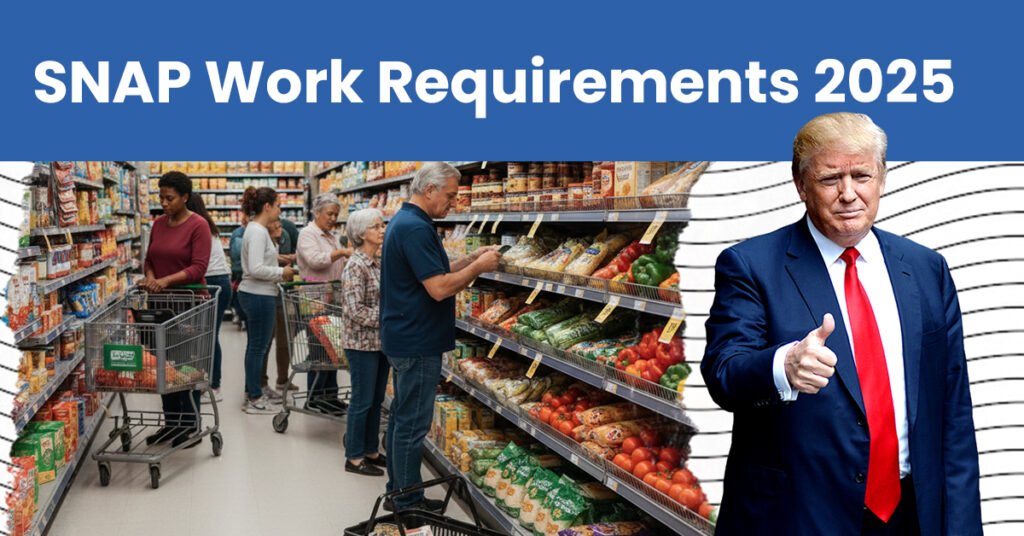
USDA Reinstates Full SNAP Work Requirements After Pandemic Waivers End
WASHINGTON, D.C. — The U.S. Department of Agriculture (USDA) announced that full enforcement of Supplemental Nutrition Assistance Program (SNAP) work requirements will resume nationwide on November 1, 2025. This marks the end of COVID-19 pandemic waivers that have suspended time limits for Able-Bodied Adults Without Dependents (ABAWDs) since 2020.
The policy change could affect between 700,000 to 900,000 SNAP recipients over the next year, according to internal USDA projections.
What Are SNAP Work Requirements?
SNAP work requirements mandate that certain adults must work or participate in job training programs to maintain food assistance benefits beyond a limited time period. These rules have existed since the 1996 welfare reform but were suspended during the COVID-19 pandemic.
Key SNAP Work Requirement Rules
Under federal law (7 U.S.C. § 2015(o)), Able-Bodied Adults Without Dependents can only receive three months of SNAP benefits within any 36-month period unless they meet specific work or training requirements.
To maintain SNAP benefits beyond three months, ABAWDs must:
- Work at least 80 hours per month, OR
- Participate in a state-approved job training program, OR
- Qualify for an exemption
Who Must Meet SNAP Work Requirements?
ABAWD Definition
Able-Bodied Adults Without Dependents (ABAWDs) are SNAP recipients who meet all of the following criteria:
- Age: Between 18 and 64 years old
- Physical ability: Medically able to work
- Household status: No dependent children in the household
- Employment status: Not working sufficient hours or participating in qualifying programs
SNAP Work Requirement Exemptions
The following individuals are EXEMPT from work requirements:
✓ Pregnant individuals (at any stage)
✓ People with disabilities or deemed medically unfit for work
✓ Veterans (all categories)
✓ Homeless individuals
✓ Caregivers responsible for an incapacitated person
✓ Students in approved education or training programs
✓ Parents or guardians with dependent children under 18
Additionally, states may grant limited “discretionary exemptions” to up to 12% of their ABAWD caseload for individuals facing unique barriers to employment.
SNAP Work Requirements by the Numbers
CategoryRequirement/DetailsAge Range18–64 years oldMinimum Work Hours80 hours per monthBenefit Time Limit3 months in any 36-month period (without meeting requirements)Enforcement DateNovember 1, 2025Estimated Impact700,000–900,000 recipientsState Exemption Cap12% of ABAWD caseloadQualifying ActivitiesEmployment, job training, workfare programs
Why Is the USDA Reinstating Work Requirements?
Official USDA Position
The USDA’s Food and Nutrition Service (USDA-FNS) states the policy aims to:
- Promote workforce participation among able-bodied adults
- Ensure consistency across all states
- Align food assistance with pathways to employment
- Restore original SNAP program intent as established in the 1990s
“This isn’t about punishing people,” a USDA-FNS spokesperson stated in a press release. “It’s about aligning food aid with pathways to employment.”
Legislative Background
The reinstatement follows the One Big Beautiful Bill Act (OBBBA), which mandated the end of pandemic-era grace periods and instructed states to resume full enforcement of existing federal SNAP statutes.
Criticism and Concerns About SNAP Work Requirements
Advocacy Groups Warn of Unintended Consequences
Organizations including the Center on Budget and Policy Priorities (CBPP) and the Food Research & Action Center (FRAC) have raised concerns about the policy’s real-world impact.
Key concerns include:
Administrative Barriers: Many ABAWDs already work part-time or in gig economy jobs but may struggle with verification paperwork, leading to wrongful benefit terminations.
Geographic Challenges: Rural areas with limited job opportunities and inadequate public transportation make meeting the 80-hour monthly threshold extremely difficult.
Documentation Issues: Inconsistent work schedules in service and gig industries create verification challenges that could result in benefit loss despite compliance.
State Capacity: Several states, including Oregon, Michigan, and Pennsylvania, have warned that staffing shortages could delay recertifications and processing.
“Many ABAWDs already work part-time or in gig roles,” explains Elaine Waters of CBPP. “They’ll lose benefits not because they don’t want to work, but because they can’t navigate the verification system.”
State Compliance Requirements
What States Must Do by November 1, 2025
According to USDA implementation guidelines, every state must:
- Begin full enforcement of ABAWD time limits
- Track compliance electronically and submit monthly data reports to FNS
- Apply the 12% discretionary exemption cap
- Update all outreach materials to explain new eligibility rules
- Notify affected participants in writing before any benefit reduction
States failing to meet these standards may face:
- Quality Control (QC) penalties
- Federal corrective action orders
- Increased oversight
State Readiness Varies
States reporting readiness: Texas and Florida have implemented digital tracking systems integrated with SNAP platforms.
States with concerns: Oregon, Michigan, and Pennsylvania have flagged potential delays due to staffing shortages and system upgrades.
What SNAP Recipients Need to Know
Timeline for ABAWDs
November 1, 2025: Work requirement enforcement begins nationwide
Before benefit reduction: States must provide written notification
Three-month limit: Clock starts from first month receiving benefits under new rules
36-month period: Timeframe in which only three months of benefits are allowed without meeting requirements
How to Maintain SNAP Eligibility
ABAWDs can continue receiving benefits by:
1. Employment (80+ hours/month)
- Full-time or part-time work
- Self-employment
- Gig economy work (with proper documentation)
2. Job Training Programs
- State-approved vocational training
- Workfare programs
- Employment and training (E&T) programs
3. Qualifying for Exemptions
- Medical certification of inability to work
- Verification of caregiver status
- Documentation of veteran status
- Proof of homelessness
Documentation Requirements
To verify compliance, recipients typically need:
- Pay stubs or employer verification letters
- Program participation records from training providers
- Medical documentation for disability exemptions
- Monthly reporting forms (requirements vary by state)
Impact of Government Shutdowns on SNAP Benefits
Will SNAP Benefits Continue During a Shutdown?
Yes. SNAP is classified as mandatory spending, meaning benefit payments continue even during federal budget lapses or government shutdowns.
However, administrative functions may experience delays:
- New application processing
- Recertification reviews
- Appeals and hearings
- Customer service response times
A USDA spokesperson confirmed: “Benefit payments will not stop, but processing times may slow if federal operations are limited.”
SNAP Work Requirements: State-by-State Variations
While federal law sets baseline requirements, states have some flexibility in implementation:
State Options
Waiver Authority: States can request waivers for specific regions with:
- Unemployment rates above 10%
- Insufficient job opportunities
- Economic distress designations
E&T Programs: States design their own employment and training programs that satisfy work requirements.
Verification Methods: States determine documentation requirements and tracking systems.
Exemption Processes: States establish procedures for granting discretionary exemptions within the 12% cap.
How to Check Your SNAP Status and Requirements
Resources for SNAP Recipients
State SNAP Offices: Contact your local Department of Human Services or equivalent agency
Online Portals: Most states offer online account access to check:
- Current benefit amount
- Certification period
- Work requirement status
- Required documentation
SNAP Hotline: Call your state’s SNAP customer service line for personalized guidance
Legal Aid: Free legal assistance may be available if you believe you were wrongfully terminated
The Broader Policy Debate
Supporters’ Perspective
Proponents of work requirements argue:
- Encourages self-sufficiency and economic independence
- Connects individuals with job opportunities and training
- Ensures program sustainability
- Creates fairness between working and non-working recipients
- Aligns with original legislative intent from welfare reform
Critics’ Perspective
Opponents of work requirements contend:
- Creates bureaucratic barriers that harm vulnerable populations
- Ignores realities of modern labor market (gig economy, part-time work)
- Disproportionately affects rural and economically distressed areas
- May increase food insecurity without improving employment outcomes
- Administrative costs may exceed any savings
Historical Context: SNAP Work Requirements Over Time
1996: Personal Responsibility and Work Opportunity Reconciliation Act establishes ABAWD time limits
2009-2010: Great Recession prompts widespread state waivers
2020: COVID-19 pandemic leads to nationwide suspension of time limits
2023: Some states begin reinstating requirements as pandemic waivers expire
2025: Full nationwide enforcement resumes November 1
What Happens After November 1?
Short-Term Outlook
November-December 2025: Initial notification period; states contact affected ABAWDs
January-March 2026: First wave of benefit terminations for non-compliant recipients
Spring 2026: States report initial compliance data to USDA
Long-Term Questions
- Will states have adequate E&T program capacity?
- How will verification systems handle gig economy work?
- Will labor market conditions support the 80-hour requirement?
- What will be the impact on food insecurity rates?
- Will litigation challenge the policy’s implementation?
Getting Help: Resources for Affected SNAP Recipients
National Organizations
Food Research & Action Center (FRAC)
Website: frac.org
Provides advocacy and resources for food assistance programs
Center on Budget and Policy Priorities (CBPP)
Website: cbpp.org
Offers research and analysis on SNAP policy
Feeding America
Website: feedingamerica.org
Find local food banks and emergency food assistance
State Resources
Contact your state’s Department of Human Services or social services agency for:
- Work requirement details specific to your state
- Available E&T programs
- Exemption application processes
- Appeals procedures
Legal Assistance
If you believe you’ve been wrongfully denied benefits:
- Contact your state’s Legal Aid office
- Seek assistance from local advocacy organizations
- File a formal appeal with your state SNAP agency
Conclusion: A Policy Shift with Major Implications
The November 1, 2025 reinstatement of SNAP work requirements represents a significant shift in food assistance policy, affecting potentially 900,000 Americans. While proponents view it as promoting self-sufficiency, critics worry about unintended harm to vulnerable populations.
The coming months will reveal whether states can effectively implement the policy while minimizing wrongful benefit terminations and whether the labor market can absorb newly work-seeking SNAP recipients.
For affected individuals, understanding the requirements, documentation processes, and available exemptions will be crucial to maintaining food assistance during this transition.