


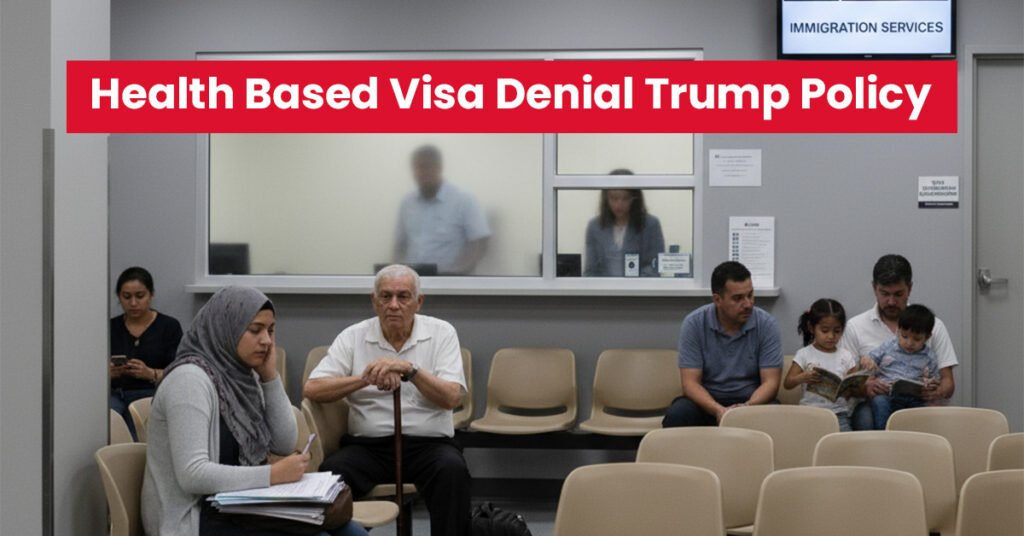
A new directive issued by the Trump administration is reshaping how U.S. embassies and consular officers evaluate visa applicants — and its implications could be far-reaching. Under the guidance, consular officials may now deny visas to immigrants who have certain medical conditions, including diabetes, obesity, cardiovascular diseases, chronic respiratory conditions, cancers, and a wide range of long-term illnesses.
This updated guidance, revealed in a State Department cable obtained by KFF Health News, signals one of the most significant expansions of health-related immigration restrictions in modern U.S. history. The directive explicitly ties chronic health conditions to the likelihood that an immigrant may become a “public charge”, meaning someone who may require financial support or long-term medical assistance at government expense.
While the U.S. has always required medical screenings for communicable diseases and certain vaccinations, experts say the new policy dramatically expands the scope of health factors considered in visa decisions — and raises troubling questions about fairness, legality, and the potential for discrimination.
Below is a deeper, 360-degree breakdown of what’s changing, who’s affected, why it’s controversial, and what this policy signals about the administration’s broader immigration agenda.
A Major Shift: Chronic Diseases Now Grounds for Visa Denial
Historically, U.S. immigration health requirements have focused on public safety, such as preventing the spread of tuberculosis, syphilis, or other communicable diseases. The goal was simple: protect public health while allowing immigrants with manageable conditions to enter.
Under the new Trump administration guidance, the focus shifts from public health risk to financial burden.
The State Department cable highlights a wide category of conditions that visa adjudicators should now evaluate for potential long-term medical costs:
Conditions listed in the new guidance include:
- Diabetes
- Obesity
- Cardiovascular diseases
- Chronic respiratory diseases, including asthma
- Neurological disorders
- Mental health conditions
- Certain cancers
- Metabolic diseases
- Disabilities requiring ongoing support
The document emphasizes that these medical issues “can require hundreds of thousands of dollars’ worth of care,” suggesting that the government views these applicants as potential financial liabilities.
This guidance applies broadly, affecting nearly all visa categories, but immigration experts expect the most significant impact on family-based immigrant visas, employment visas for long-term residency, and other applications that signal intent to remain permanently in the United States.
Why the Trump Administration Is Making This Move
This health-based directive fits into a much larger strategy under the Trump administration: to drastically reduce immigration — both legal and undocumented — and reshape who is allowed into the United States.
The broader immigration crackdown includes:
- Mass deportations of undocumented immigrants
- Dramatic cuts to refugee admissions
- Aggressive enforcement operations
- Plans to limit high-skilled visas (even while publicly supporting talent-based immigration)
- Revocations of visas for foreign students involved in campus protests
- New public charge restrictions focused on financial and economic self-sufficiency
The new health guidance is designed to ensure that immigrants entering the U.S. will not require government support or be financially dependent on the healthcare system. This policy effectively prioritizes young, healthy immigrants with minimal medical risks.
Supporters argue that taxpayers should not shoulder the cost of chronic medical care for immigrants. Critics, however, argue that the policy is discriminatory and undermines U.S. values.
Experts Warn: Consular Officials Aren’t Medically Trained
One of the chief concerns raised by immigration lawyers is that consular officers — the individuals who will make decisions under this new policy — are not medical experts.
Under traditional immigration rules, applicants are examined by physicians approved by a U.S. embassy. These doctors perform standardized screenings for infectious diseases and review medical history.
But under the new guidance:
Consular officers — not doctors — have the final say.
The cable encourages officers to:
- Evaluate an applicant’s likelihood of future medical emergencies
- Assess long-term care costs
- Decide whether an applicant’s condition may prevent employment
- Consider whether dependents might rely on care
As Charles Wheeler of the Catholic Legal Immigration Network notes, this gives consular officials broad authority to make decisions based on speculation, assumptions, or personal bias, rather than clinical evidence.
This contradicts the State Department’s own Foreign Affairs Manual, which explicitly states that visa decisions cannot be based on hypothetical “what if” scenarios.
This shift introduces unprecedented subjectivity into the visa process.
A Global Impact: How Many People Could Be Affected?
Chronic medical conditions are common — worldwide.
Global prevalence rates:
- Diabetes: 10% of the world’s population
- Obesity: Over 1 billion people globally
- Cardiovascular diseases: Leading global cause of death
- Asthma: 262 million people affected
Under these guidelines, potentially millions of visa applicants each year could be subject to heightened scrutiny — or outright denial.
This includes:
- Parents joining adult children in the U.S.
- Spouses and fiancés applying for family visas
- Workers with chronic conditions
- Foreign students
- Elderly relatives seeking long-term residency
- Immigrants from regions with high chronic disease prevalence
Immigration advocates say the directive risks turning the U.S. visa system into one that selectively accepts only the young, fit, and financially well-off.
Public Charge Concerns: A Return to a Controversial Policy
The Trump administration previously expanded the “public charge” rule in 2019, but those changes were later halted in court.
The new guidance revives the framework and applies it through health-based criteria.
Visa officers are instructed to determine:
- Whether the applicant or dependents may require costly care
- Whether the applicant has the financial means to cover lifetime medical needs
- Whether chronic illness could affect employability
- Whether dependents’ conditions may lead to government-supported care
The cable even instructs officers to evaluate whether an applicant may seek long-term institutionalization at public expense.
This represents an enormous expansion of public charge interpretation, which historically avoided penalizing immigrants for medically manageable conditions.
Financial Scrutiny: Can Applicants Afford a Lifetime of Care?
In addition to evaluating health status, visa officers must now consider whether applicants have sufficient financial resources to cover:
- Treatment
- Medication
- Long-term care
- Hospitalization
- Emergency services
- Health support for dependents
- Loss of income due to chronic illness
This could disproportionately affect:
- Low-income applicants
- Immigrants without U.S. health insurance
- Applicants from developing nations
- Older parents joining family in the U.S.
- Spouses with significant medical histories
The guidance implicitly favors wealthy applicants who can prove substantial financial reserves.
Critics Say the Policy Is Discriminatory
Immigration lawyers warn that the policy could:
- Discriminate against people with disabilities
- Penalize immigrants from poorer nations
- Shut out applicants with treatable chronic diseases
- Violate anti-discrimination standards
- Create uneven or biased decision-making among consular officers
- Lead to inconsistent visa outcomes globally
Sophia Genovese of Georgetown University notes that the policy pressures physicians and officers to speculate about future medical emergencies, which is both medically and administratively problematic.
Impact on Families and Dependents
The guidance explicitly instructs visa officers to evaluate not only the applicant but also their family members.
Officers are told to consider:
- Disabilities among children
- Elderly parents who require care
- Dependents with chronic medical conditions
- Whether caregiving needs could prevent employment
This could have serious consequences for mixed-health families.
A Major Barrier for Future Immigrants
The new guidelines signal a transformation in how the United States views immigration: shifting from a humanitarian and family-based model toward a selective, economically driven system that prioritizes health and self-sufficiency above all else.
Immigrants with chronic medical conditions — regardless of their skills, family ties, or financial contributions — may now face significant barriers to entry.
A Historic Change With Long-Term Consequences
The Trump administration’s new health-based visa guidance marks one of the most sweeping changes to immigration policy in decades. By expanding the definition of “public charge” to include a wide range of chronic illnesses, the policy hands broad discretionary power to consular officers, many of whom lack medical expertise.
This health-centered approach could reshape the future of U.S. immigration — limiting opportunities for millions of people worldwide, restricting family reunification, and creating new obstacles for vulnerable groups.
As the administration continues its aggressive immigration agenda, this new directive is likely just one part of a much larger strategy to reshape who is welcomed into the United States.